
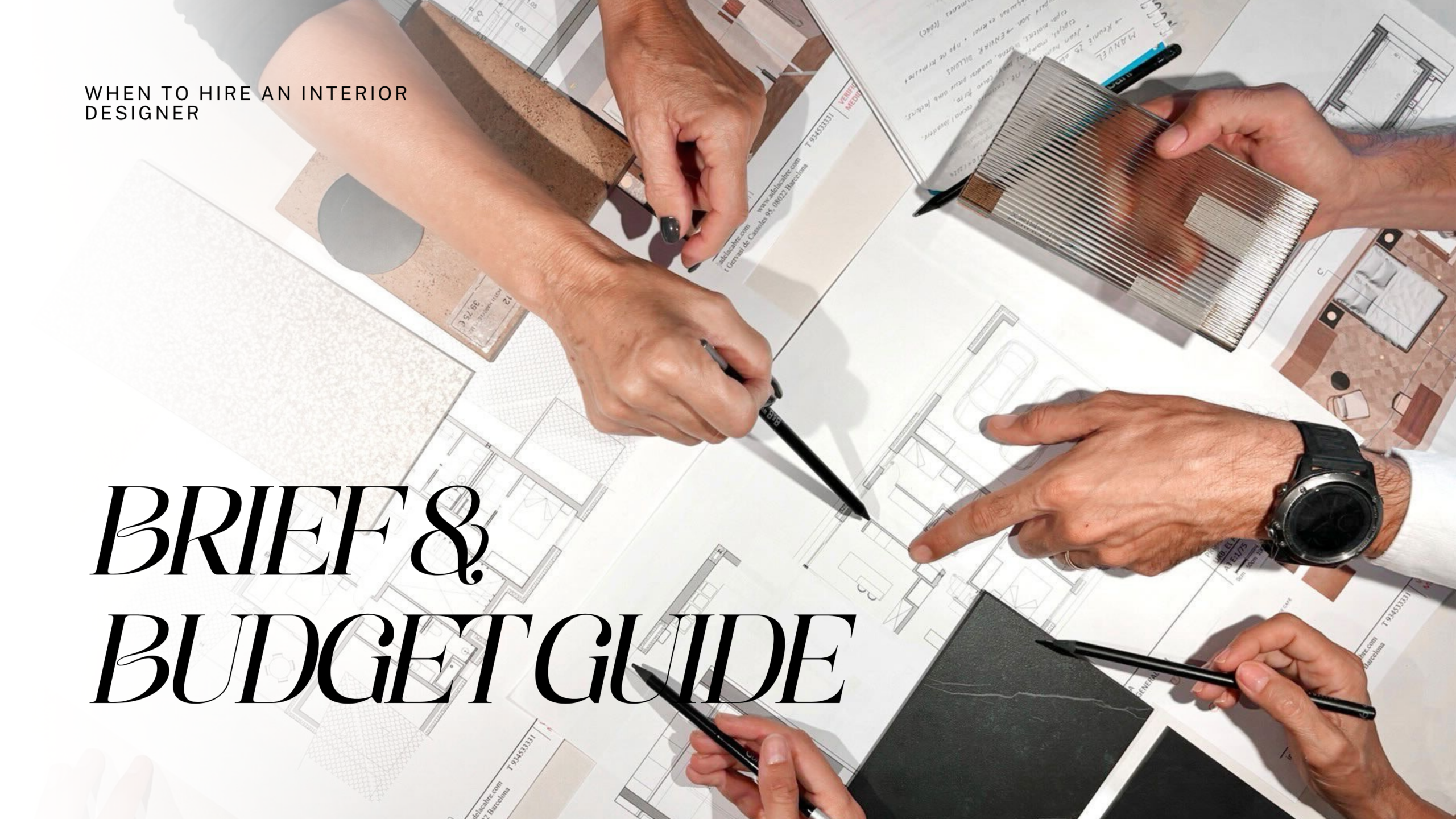
When to Hire an Interior Designer, and How to Prepare Your Brief and Budget
Critical Signs It’s Time to Hire an Interior Designer
Many owners assume an interior designer is a finishing touch, someone you bring in near the end to choose cushions and paint colours. In reality, the best time to hire interior designer support is far earlier, and knowing the signs can save you significant money and regret. You should be talking to a designer at the planning stage if any of the following apply: you are building or renovating and the floor plan is not yet finalised; you struggle to picture how the finished space should look or function; you have a defined budget you cannot afford to overspend; or you simply lack the time to research materials, coordinate trades and manage the hundreds of decisions a project demands.
The most important of these is timing. Engaging a designer while the layout is still on paper means they can influence where walls, plumbing, electrical points and lighting go, decisions that are cheap to change on a drawing and enormously expensive to change once built. Owners who wait until construction is underway pay to correct problems that a designer would have prevented for free. If your project is still being planned, that is the point when a designer adds the most value, not the least.
Step-by-Step Guide: How to Prepare a Designer-Friendly Brief
A good brief is the foundation of a smooth project. The clearer you are about what you want and how you live, the faster a designer can deliver something that fits, and the less you pay in revisions. A strong brief doesn’t require design expertise, just honest self-assessment across a few areas.
Defining Lifestyle Needs vs. Aesthetic Preferences
The most useful thing you can give a designer is an understanding of how you actually live, not just what you find beautiful. Separate the two deliberately. Lifestyle needs cover the practical: how many people live in the home, whether you cook seriously or rarely, whether you work from home, how you entertain, how much storage you need, and any specific requirements around children, pets or accessibility. Aesthetic preferences cover the look: the styles, colours, materials and moods you are drawn to, best expressed through reference images rather than words. Designers can create almost any look, but only you can tell them how your household functions. A brief that leads with lifestyle produces a home that works; one that leads only with pretty pictures often produces a home that photographs well and lives poorly.
Setting a Realistic Timeline and Material Preferences
The second half of a good brief is about constraints. Be honest about your timeline (when you need to move in, and any fixed dates that can’t slip) so the designer can plan procurement and construction realistically. Share any strong material preferences or aversions up front (a love of natural wood, a dislike of high-gloss surfaces, a need for low-maintenance finishes because of pets or children), as these shape decisions from the very beginning. Finally, note anything you already own and want to keep. Providing these constraints early prevents the frustration of falling in love with a scheme that cannot be built in your timeframe or does not suit how you live.
Understanding Interior Design Budgeting and Pricing Models in Bangkok
One of the biggest sources of confusion for first-time clients is how designers charge. In Bangkok, fees generally follow one of three models, and understanding them helps you compare quotes fairly.
The first is a percentage of the project cost, where the design fee is a set percentage of the total construction and furnishing budget. This scales naturally with the scope of the work and is common on larger projects.
The second is a per-square-metre fee, where you pay a rate for each square metre of space designed. As a rough market guide, residential design fees in Bangkok often fall in the region of 1,400–2,500 THB per square metre, with the rate typically decreasing as the area grows larger. This model is transparent and easy to budget against.
The third is a flat fee, a single agreed price for a defined scope of work, most common on smaller or clearly bounded projects.
Beyond the design fee itself, remember that the true cost of a project has three layers: design, construction and furnishings (FF&E). A complete budget must account for all three. When comparing an interior designer bangkok quote against another, make sure you are comparing the same scope, not just the headline fee. These figures are general market benchmarks; a specific quote should always be confirmed with the studio.
How to Find and Filter the Best Interior Designer in Bangkok
Finding candidates is easy; filtering them is where care pays off. To identify the best interior designer in bangkok for your project, start with portfolios, but look past the prettiest images. Confirm that a designer has genuinely delivered projects similar to yours in type, scale and style, a specialist in minimalist condos may not be the right fit for a classical house, and vice versa. Then look for professionalism signals: a clear process, transparent pricing, verifiable past clients and, ideally, reviews or references you can check.
Be alert to red flags. Reluctance to provide an itemised quotation, vague or evasive answers about timeline and process, pressure to pay large sums up front, and an unwillingness to put guarantees in writing are all warning signs of a designer who may not operate professionally. A trustworthy designer welcomes questions about cost, process and accountability; one who deflects them is telling you something important.
Working Effectively with an Interior Designer or Design Firm
Hiring the right person is only half the equation; the collaboration itself determines the result. Once you engage an interior designer bangkok or an interior design firm bangkok, a few habits keep the project on track. Consolidate your feedback and give it clearly at each review stage rather than in a stream of small changes, which inflate cost and timeline. Trust the expertise you are paying for, push back where you disagree, but resist micromanaging every detail. Respect the agreed process and approval gates, since changes made after a stage is signed off are the main cause of budget creep. Most of all, communicate openly and early; the best outcomes come from a real partnership where the designer understands your priorities and you understand the reasoning behind their recommendations.
A Simple Brief Template You Can Copy
If a blank page feels daunting, a short structured template turns your thoughts into something a designer can act on immediately. Start with the basics: the property type, size and location, and who lives there. Next, state your goal in a sentence, for example, “a calm, low-maintenance family home” or “a refined condo that feels larger than its footprint.” Then list your lifestyle needs room by room: how you cook, work, entertain, sleep and store your belongings, plus any requirements around children, pets or accessibility. Follow with your aesthetic direction, expressed through a handful of reference images rather than adjectives, and note any strong material likes and dislikes. Set out your practical constraints clearly: your total budget, your ideal move-in date and any fixed dates, and anything you already own that must stay. Finally, flag any known problems with the space: poor storage, awkward layout, harsh light. A brief covering these seven points gives a designer almost everything they need to respond accurately, which means fewer rounds of revision and a lower total cost. It also forces a useful conversation among household members before money is committed.
Frequently Asked Questions
When should you hire an interior designer while building a home?
As early as possible, ideally while the floor plan is still being finalised, before construction begins. At this stage a designer can influence where walls, plumbing, electrical points and lighting go, decisions that are cheap to change on a drawing but very expensive to alter once built. Owners who wait until construction is underway end up paying to correct problems a designer would have prevented for free. Early involvement delivers the most value, not the least.
What information should a home design brief include?
A good brief covers seven things: the property details and who lives there; your overall goal in a sentence; your lifestyle needs room by room; your aesthetic direction shown through reference images; your material preferences and aversions; your practical constraints, budget, timeline and anything you’re keeping; and any known problems with the space. Leading with how you actually live, rather than only with images you like, produces a home that functions well, not just one that photographs well.
How is an interior designer’s fee calculated in Bangkok?
Fees usually follow one of three models: a percentage of the total project cost, common on larger jobs; a per-square-metre rate, often in the region of 1,400–2,500 THB per square metre for residential work, typically decreasing as area grows; or a flat fee for a clearly defined scope. Remember that the design fee is separate from construction and furnishing costs. When comparing quotes, make sure you are comparing the same scope, and confirm exact figures with the studio.
Conclusion & Final Tips
The decision to hire interior designer support is most valuable when made early, at the planning stage, where good design prevents expensive mistakes. Prepare a brief that leads with how you live, be realistic about timeline and materials, understand the three fee models so you can compare quotes fairly, and filter candidates on relevant experience and professional transparency rather than photographs alone. Do this, and you set the project up to run smoothly from the first meeting.
If you are ready to start and would like a clear, transparent process from brief to handover, the Beyond Decor team is glad to help. Reach out to discuss your project, and we will guide you through preparing your brief, budget and next steps.
Contact Beyond Decor today to consult with our expert design team!